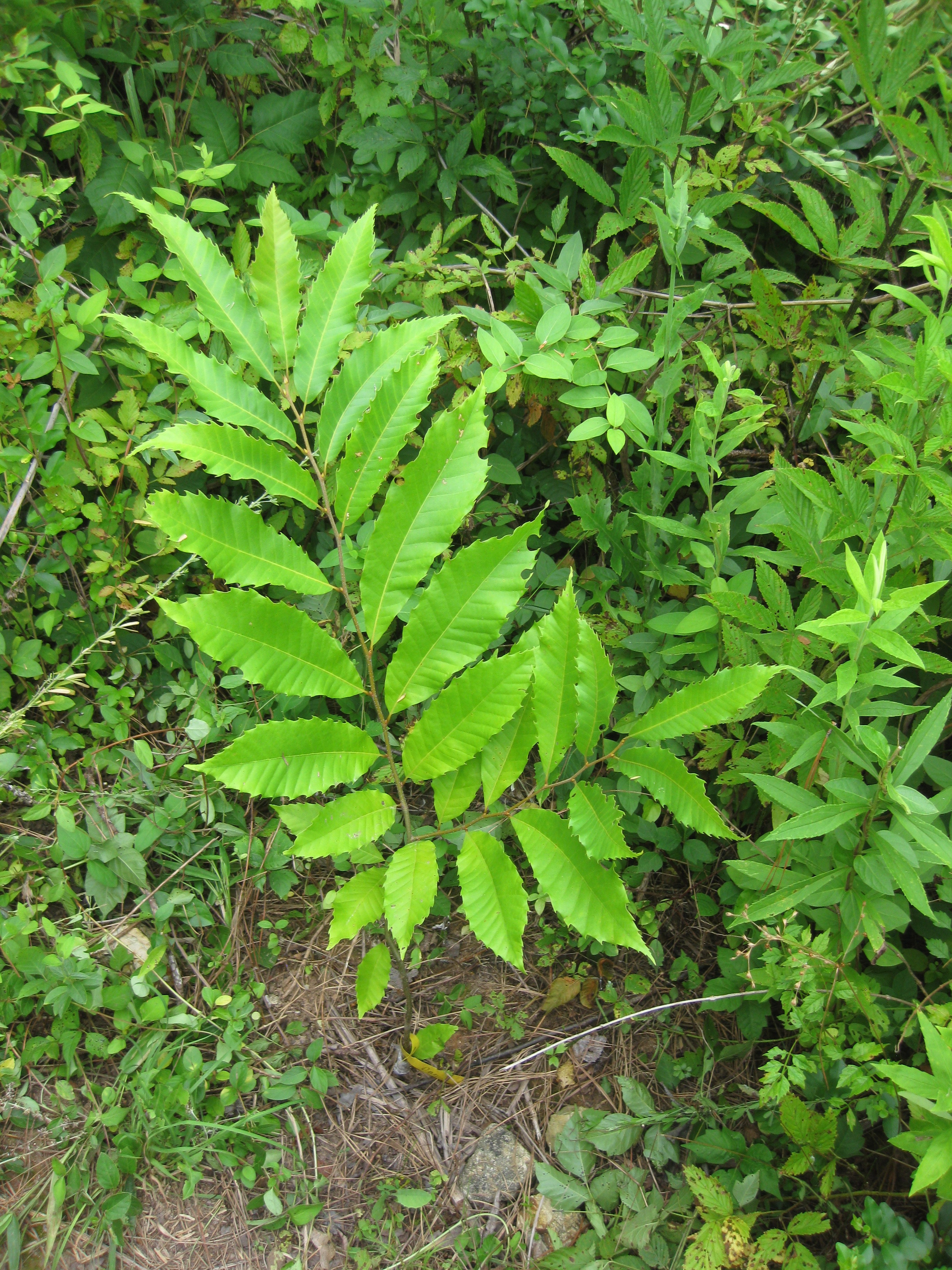
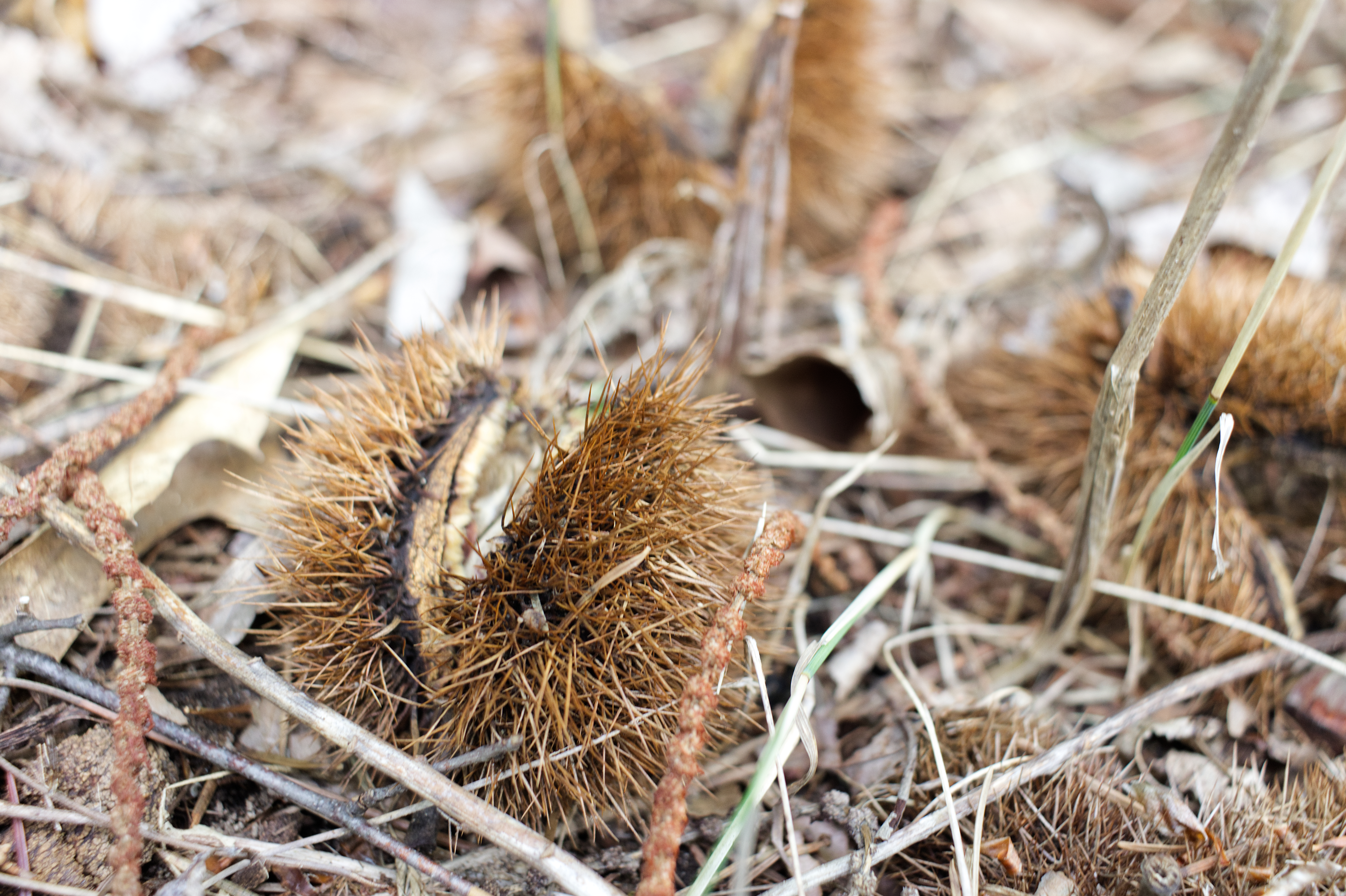
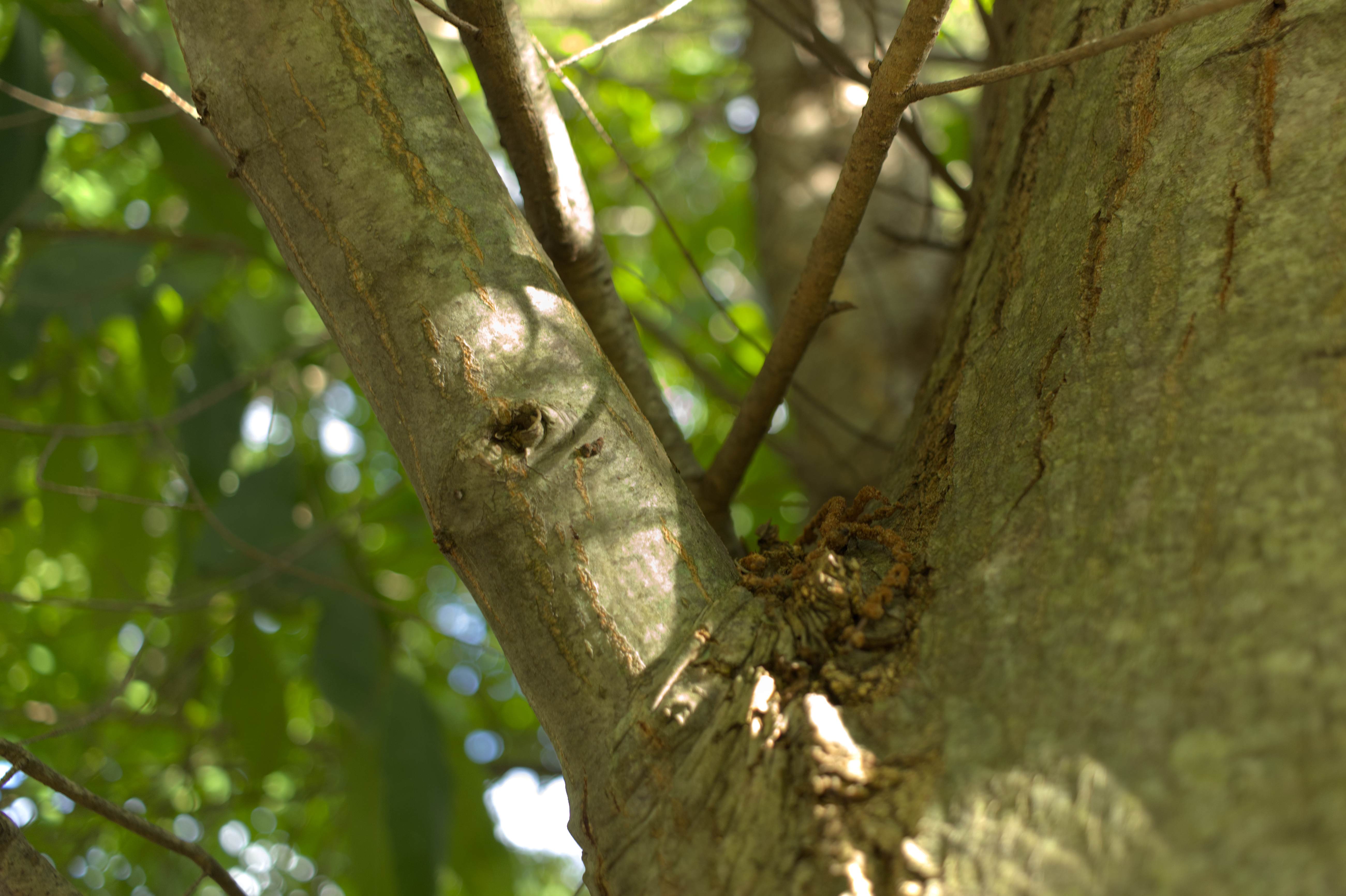
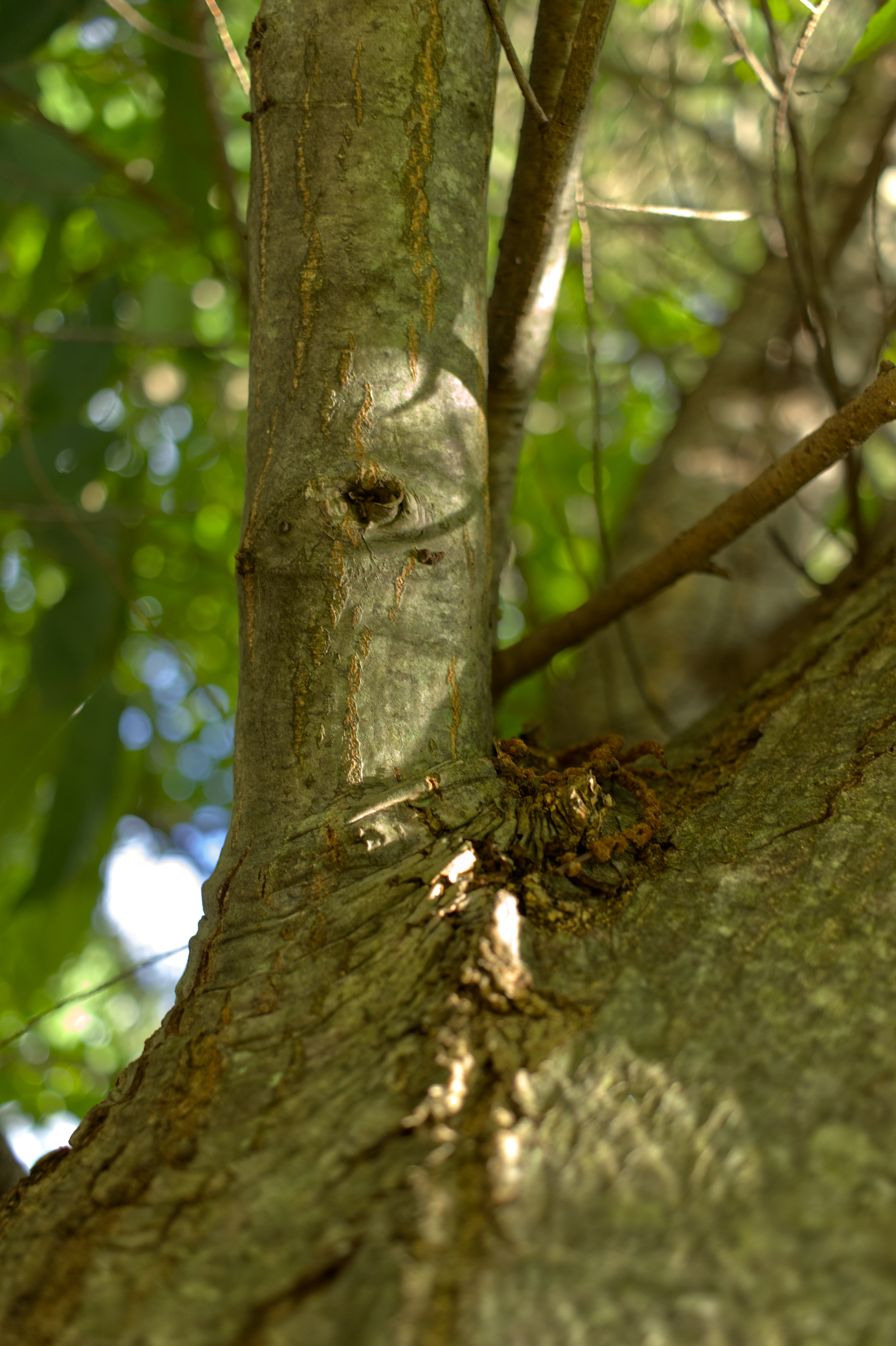
The American chestnut once was one of the largest trees in Eastern United States. Because of a parasite, it is now a rare stump sprout in the forest and seldom, if ever, a large tree. Because they rarely reach mature size, they rarely show their flowers—light-tan catkins. The female flowers produce green burs that dry to brown and split into four sections, releasing about four edible "chestnuts".
Edible Parts: Shelled chestnuts are edible raw.
Images
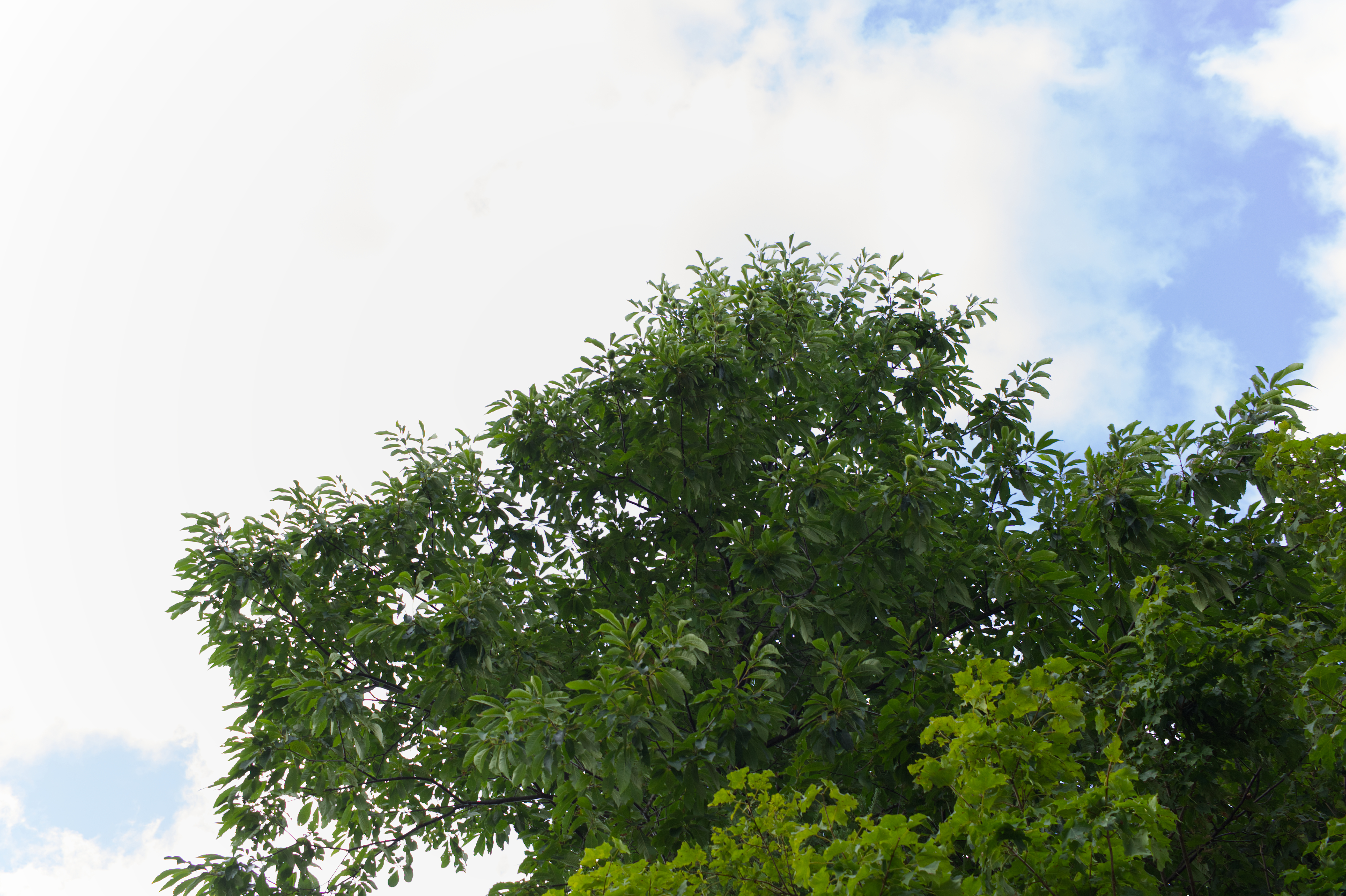
tree:
The American chestnut once was one of the largest trees in Eastren United States. Because of a parasite it is now a rare stump sprout in the forest and seldom, if ever, a large tree.
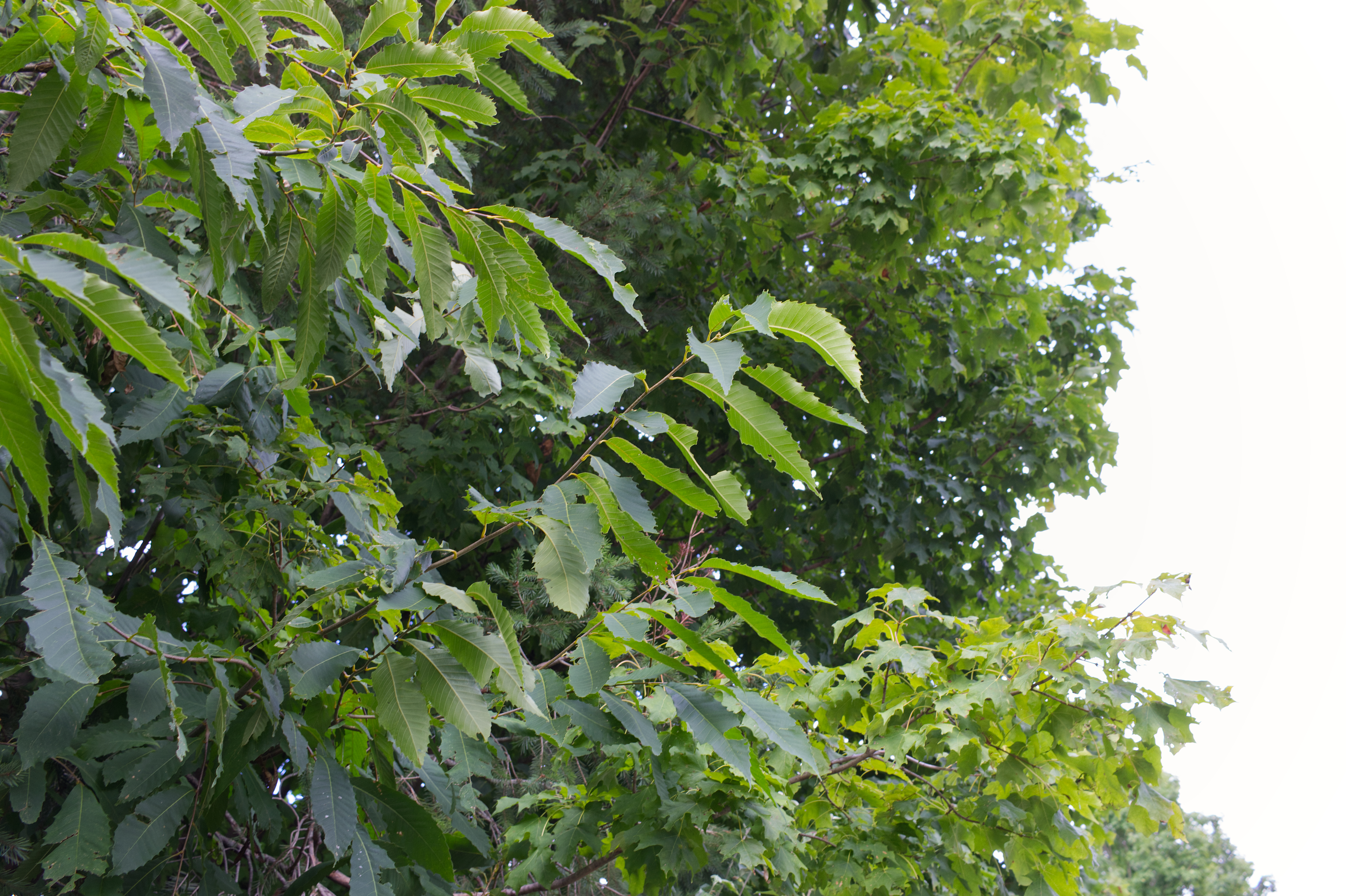
leaf:
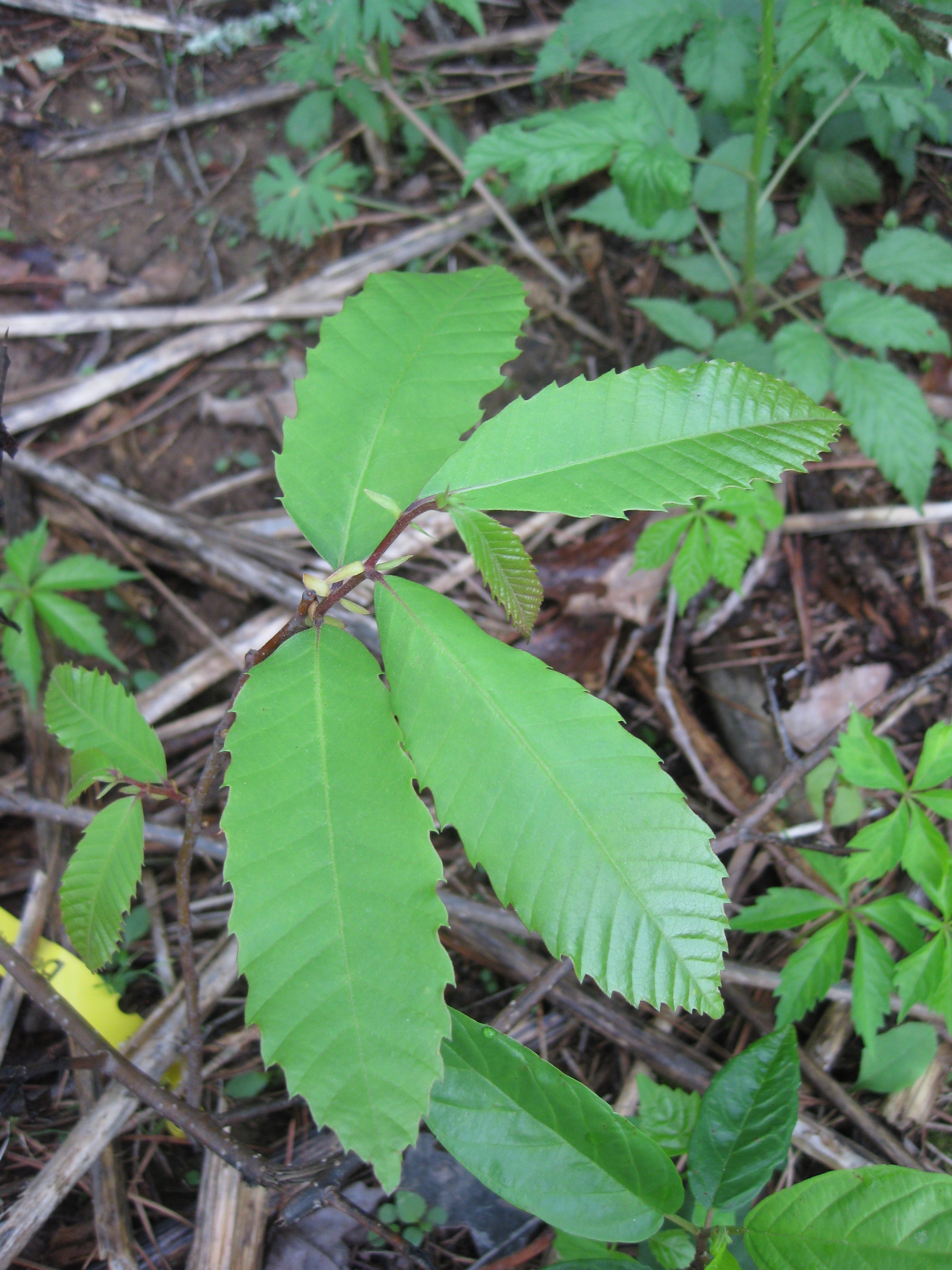
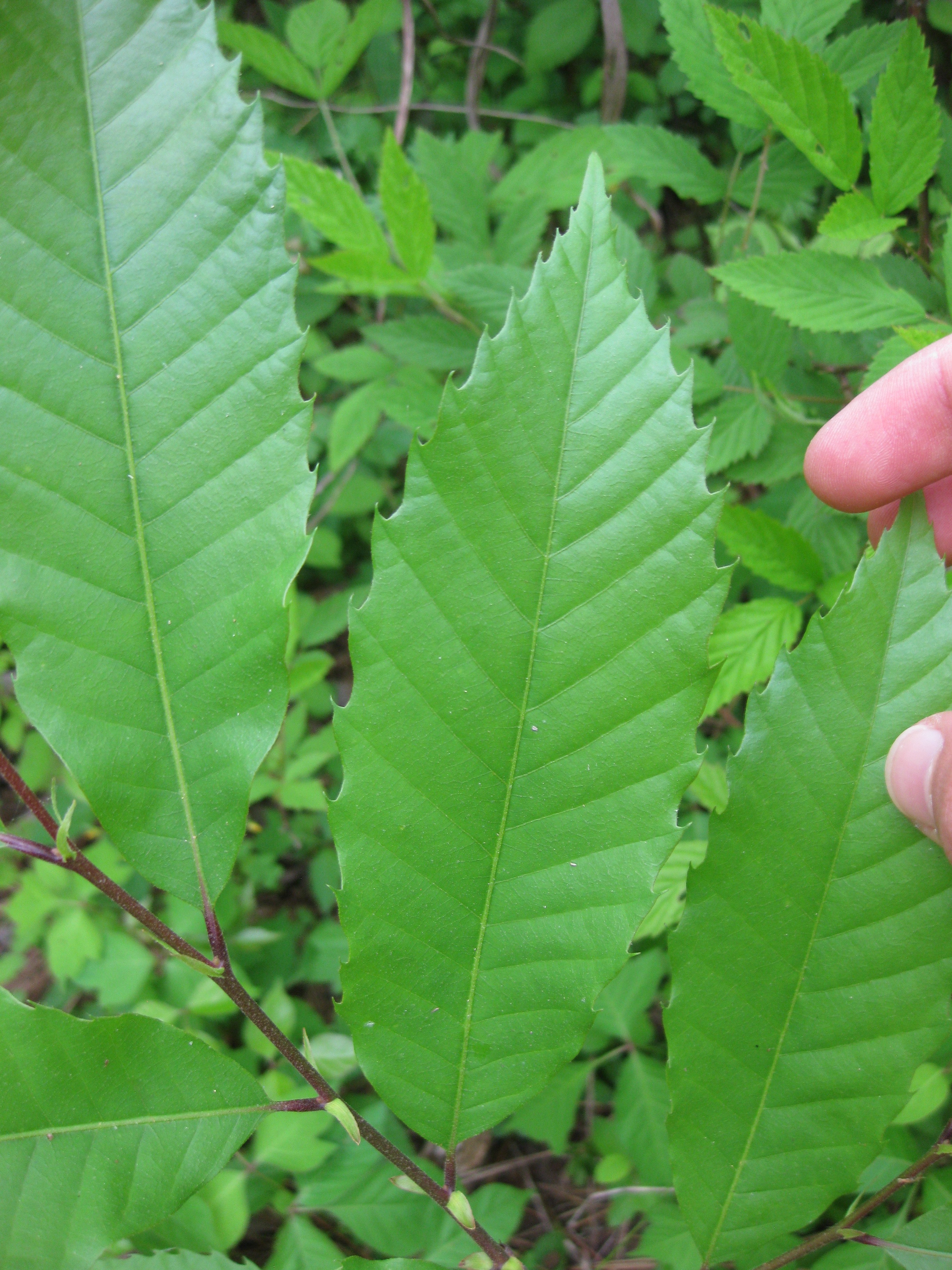
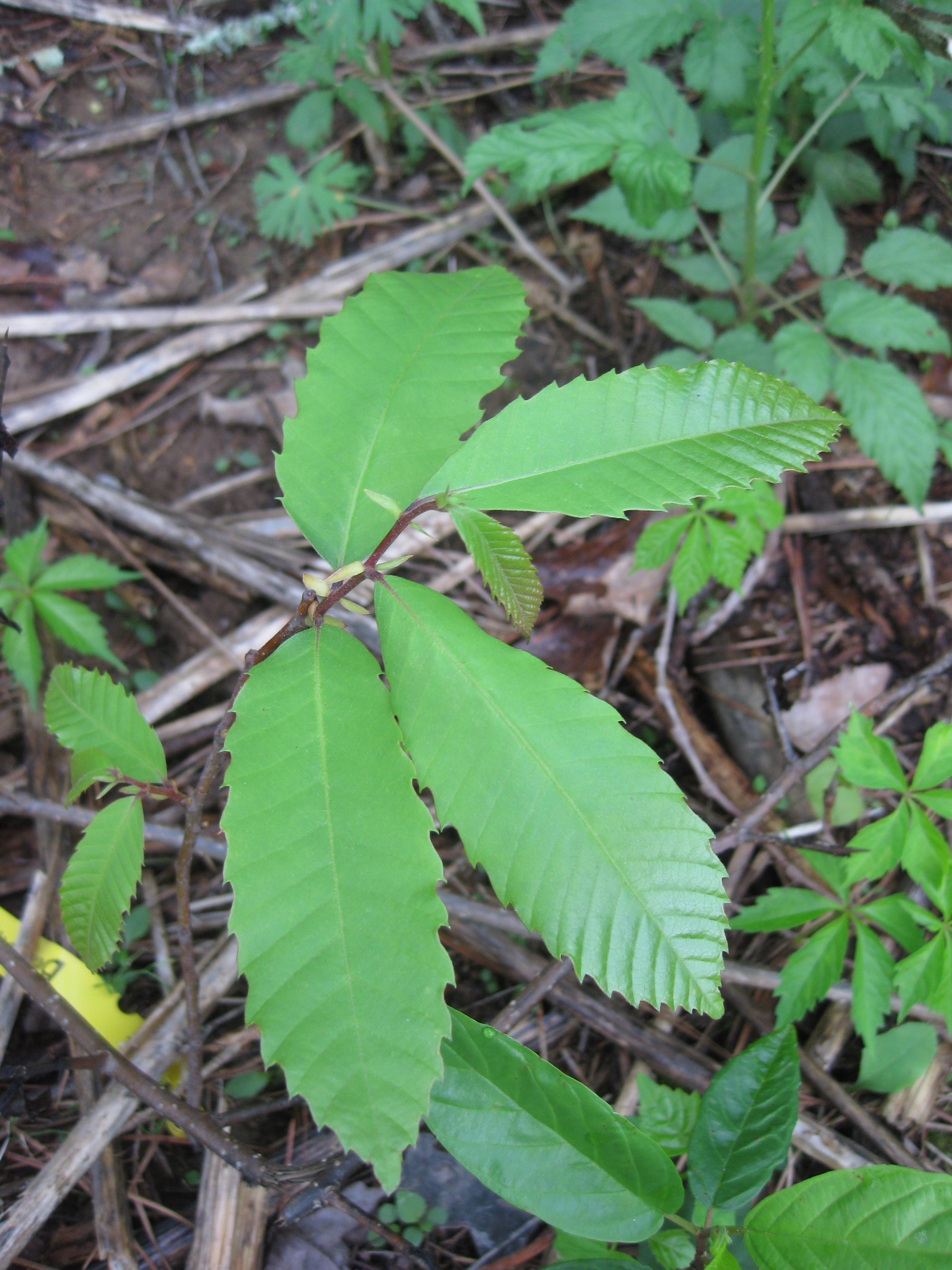
Castanea dentata has distinctively hook-toothed leaves.
fruit:
The female flowers produce green burs that dry to brown and split into four sections, releasing about four edible "chestnuts".
twig:
Castanea dentata twigs are chestnut colored with many bright lenticels.
branch:
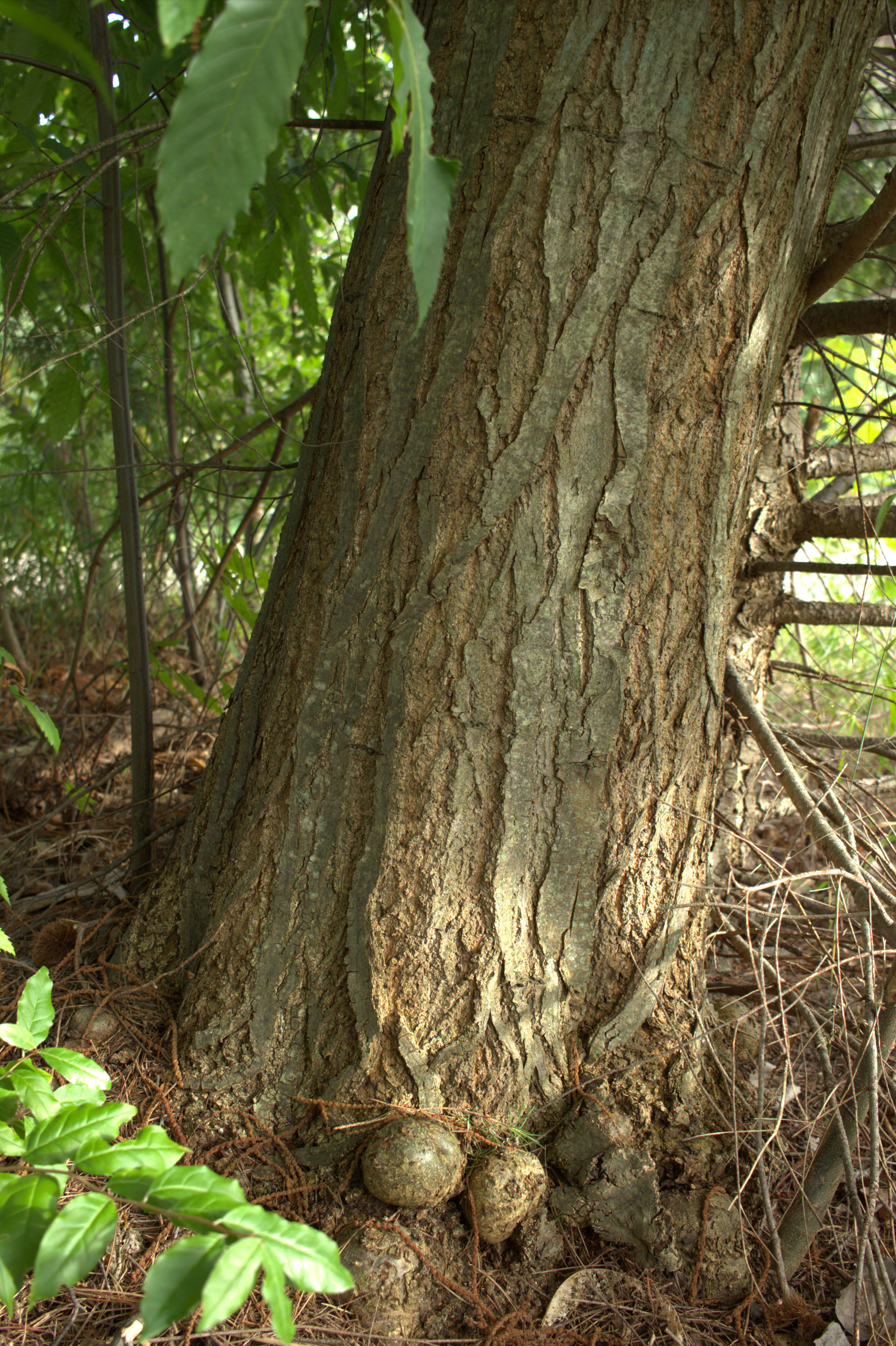
bark:
pests:
Because of a parasite (the chesntut blight), American chestnuts are now rare stump sprouts in the forest and seldom, if ever, large trees. The chestnut blight produces a canker that eventually encirles previously healthy stems and kills them.
 Castanea dentata (American chestnut)